

 Prashant Sahani
 Experiencing the Magic of Holi in Mathura and Vrindavan
Understanding the Significance of Holi
🎨 The Spirit of Holi – A Festival of Colors and Joy
Holi, famously known as the Festival of Colors, is one of India’s most vibrant and joyous celebrations. Observed in the month of March, it marks the arrival of spring and symbolizes new beginnings. Beyond the color and fun, Holi carries deep cultural and spiritual significance rooted in Hindu traditions. The festival’s origins are closely linked to the divine tales of Lord Krishna, who is adored for his playful charm and eternal love. Through these stories, Holi becomes a celebration of joy, love, and the beauty of human connection.
🥘 Mathura & Vrindavan – The Heart of Holi Celebrations
In Mathura and Vrindavan, the sacred towns associated with Lord Krishna’s early life, Holi is celebrated with unmatched enthusiasm. The festival here represents the joyous bond between Krishna and the gopis (milkmaids), as they playfully throw colored powders and splash water on one another. This lively exchange fills the air with happiness, symbolizing love, equality, and divine affection. The celebration also marks the onset of spring — a season of renewal and blossoming — bringing with it an atmosphere of laughter, dance, and devotion.
🔥 Symbolism of Unity and Triumph of Good Over Evil
Beyond the colors and revelry, Holi also signifies the victory of good over evil, inspired by the legend of Holika and Prahlad. This tale teaches the importance of faith, righteousness, and positivity. During Holi, people gather to burn the Holika Dahan bonfire, symbolizing the destruction of negativity. The festival fosters togetherness as people forget differences of caste, creed, and social status to celebrate as one. Holi thus stands as a symbol of unity, love, and joy — a celebration that paints India’s cultural fabric with the hues of harmony and hope.
Preparing for the Celebration: What to Expect
Experiencing the Festivities: Key Events and Activities
🌈 The Magical Holi of Mathura and Vrindavan
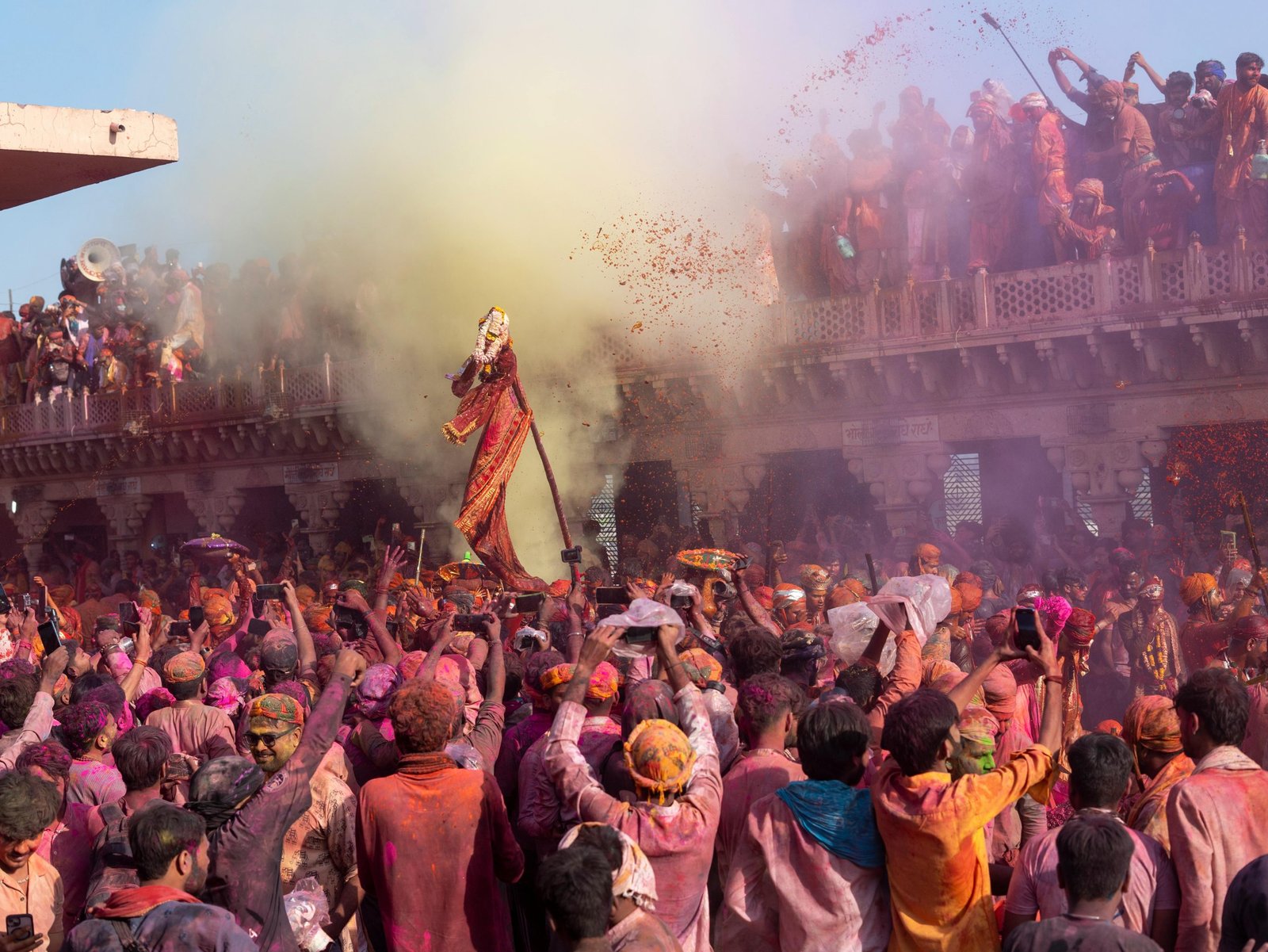
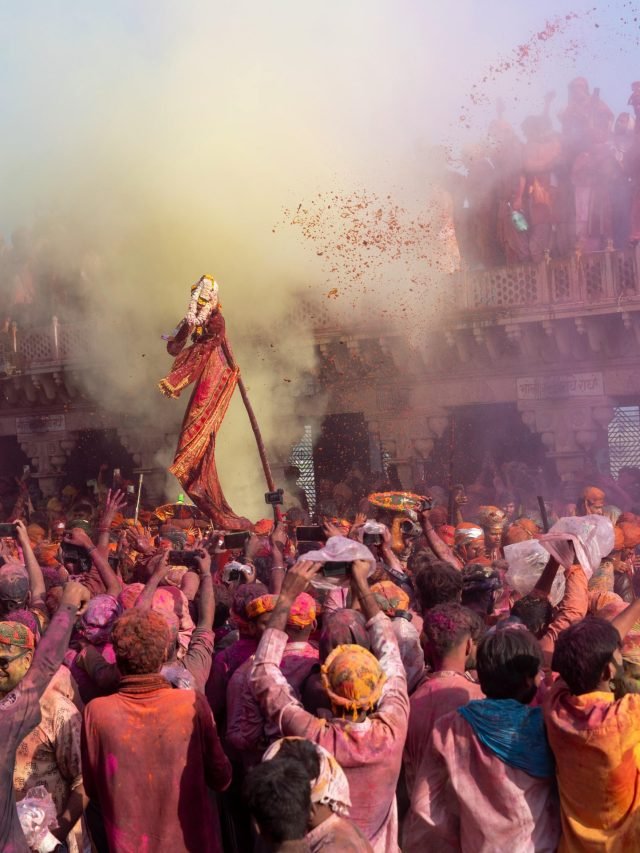
The vibrant celebration of Holi in Mathura and Vrindavan is unlike anywhere else in India. As the birthplace and childhood home of Lord Krishna, the entire region bursts into a spectacular display of color, devotion, and festivity. Streets come alive with lively processions, traditional folk dances, and melodious music echoing the divine stories of Krishna and Radha. Locals and visitors alike join these joyous parades, playing with colors and singing devotional songs, turning the towns into a living kaleidoscope of love and happiness.
🎶 Temple Festivities and Divine Traditions
Temples across Mathura and Vrindavan become the heart of Holi celebrations. The famous Banke Bihari Temple and Radha Raman Temple draw huge crowds of devotees who gather to witness the ceremonial throwing of colors — the joyful gulal. This act symbolizes devotion, equality, and divine love. Special pujas, bhajans, and rituals are performed throughout the day, filling the atmosphere with spiritual energy and reverence. Every splash of color, every chant of Krishna’s name, connects people to the sacred essence of the festival, making it not just a visual delight but a soulful experience.
💚 Enjoying Holi Safely and Respectfully
To truly embrace the spirit of Holi in Mathura and Vrindavan, participation should be joyful yet mindful. Visitors are encouraged to wear white or old clothes, as they best showcase the vibrant colors. Always use natural, eco-friendly powders to protect your skin and the environment. Engaging in local dances, singing festive songs, and sharing laughter with strangers transform the celebration into a heartwarming memory. Above all, respect the local traditions and play responsibly — for the real essence of Holi lies in friendship, unity, and pure joy.
Staying Safe and Respectful During Holi


0 Comment